The 10K occupies a sweet spot in road racing. It's long enough that you need real endurance, but short enough that top-end speed still matters. The best 10K shoe has to balance responsiveness with just enough cushioning to keep your legs comfortable for 30–55 minutes of hard running.
Data from major 10K races shows that the carbon super shoe revolution has had a measurable impact at this distance. A 2024 analysis published in Sports Medicine found that modern plated shoes improve 10K performance by 2–3% on average — that's 40–90 seconds for most runners. The 10K is the sweet spot for carbon-plated racing shoes: long enough to benefit from the energy savings, but short enough that weight and ground feel still matter.
Whether you're chasing a sub-40, racing a competitive 10K, or looking for the best value, this guide has you covered.
What Makes a Great 10K Shoe?
The 10K demands a different balance than the 5K. You're running hard for 30–55 minutes — long enough that pure minimalism starts to hurt, but short enough that every gram still counts. Here's what matters:
- Energy Return — Critical. 30–55 minutes of high effort demands efficient foam that gives energy back on every stride
- Weight — Very High. Still a short enough race that lightweight construction provides a real advantage
- Carbon Plate — Very High. 2–3% improvement at this distance is well documented and meaningful
- Cushioning — Moderate to High. More important than at 5K, but less than at half marathon. You need protection without sluggishness
- Fit & Lockdown — High. You need confidence at pace without hot spots developing mid-race
- Breathability — High. Sustained effort generates significant heat over 30+ minutes
The 10K sweet spot: This distance is arguably where super shoes provide the best weight-to-benefit ratio. You're running long enough for the energy savings to accumulate, but short enough that the lighter options (Vaporfly at 186g vs Alphafly at 215g) still give you a meaningful speed advantage.
Quick Comparison: Our Top 10 at a Glance
1. Nike Vaporfly 3 — Best Overall 10K Racing Shoe
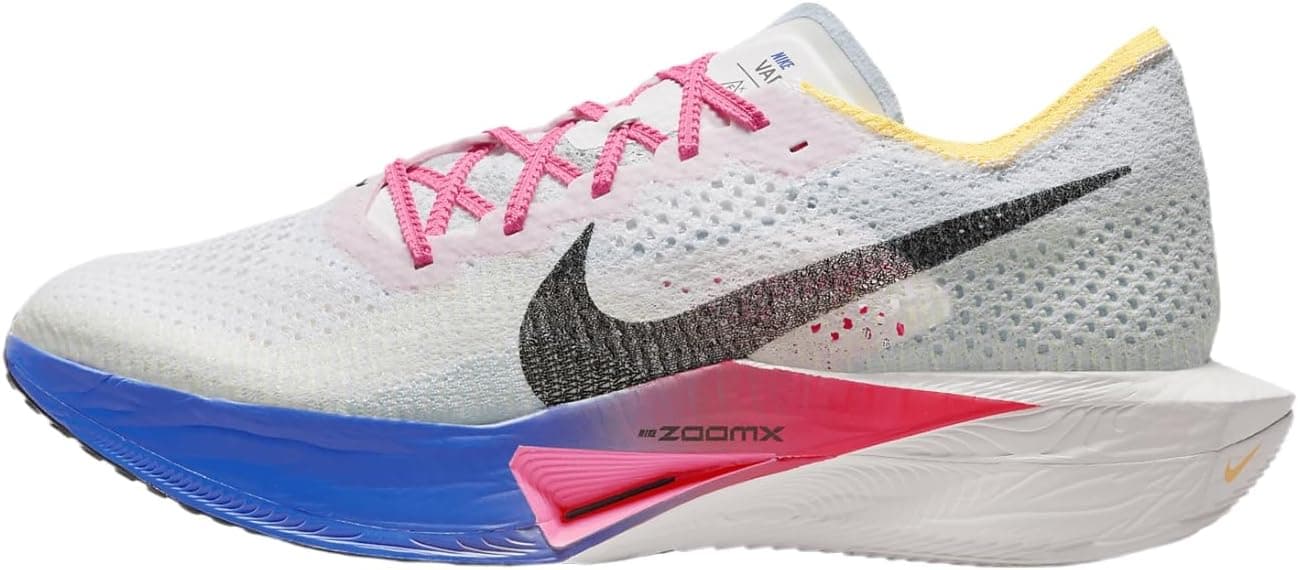
The Vaporfly 3 remains the benchmark for 10K racing. At 186g, it's light enough to feel fast but has enough ZoomX foam to cushion the pounding of a hard 10K effort. More world records have been set in the Vaporfly platform than any other shoe.
What makes it special:
- ZoomX foam + carbon plate — The proven combination that has dominated racing at every distance. Maximum energy return per gram
- 186g — Light enough for speed, cushioned enough for protection over 10,000 metres
- Versatile at 10K pace — Whether you're running 32 minutes or 55 minutes, the shoe rewards your effort
- Record-breaking pedigree — The platform that revolutionised distance racing
Weight: 186g (US 10) | Drop: 8mm | Stack: 39.5/31.5mm
The verdict: The 10K is arguably the Vaporfly's best distance. It's light enough to feel fast, cushioned enough to protect you, and the carbon plate pays dividends over 10,000 metres of sustained hard running. If you're buying one shoe for 10K racing, this is it.
Why it's our #1: At 10K, you need the speed of a 5K racer with a touch more protection. The Vaporfly 3 nails this balance perfectly — 186g of proven technology that has won more 10K races than any other shoe on the market.
2. Saucony Endorphin Pro 5 — Best Comfort-to-Speed Ratio
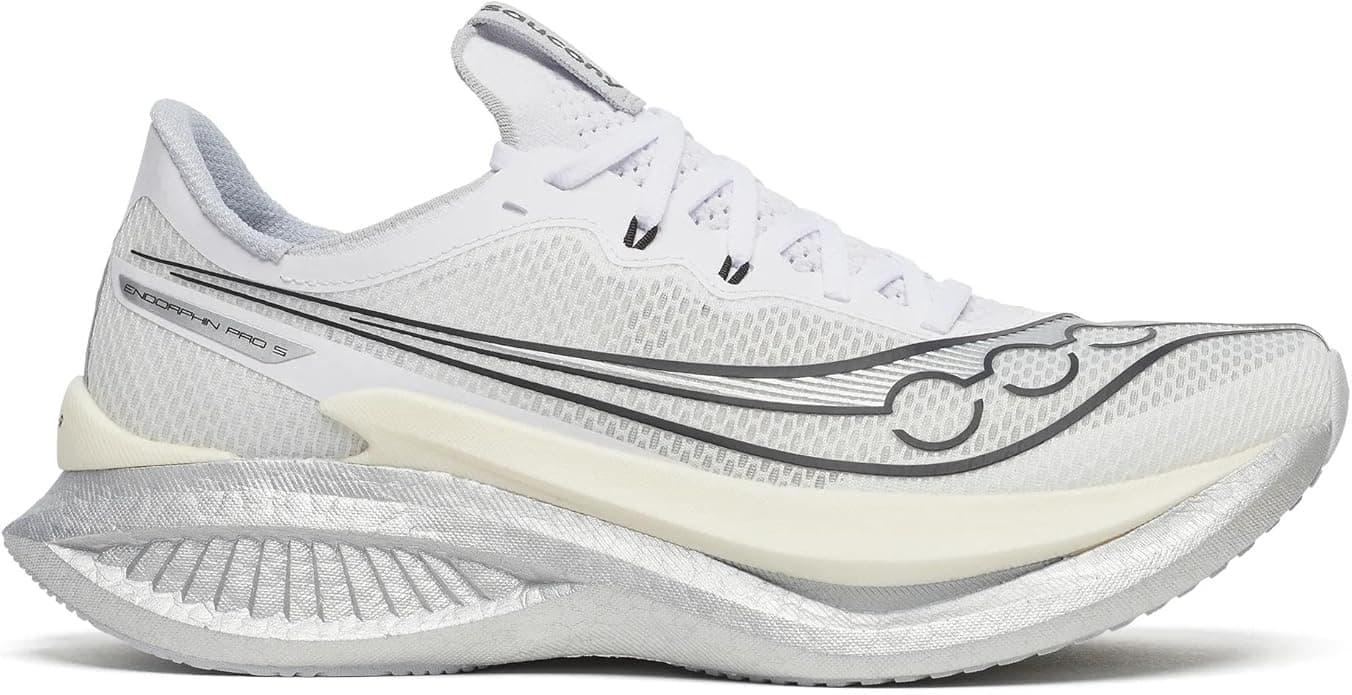
The Endorphin Pro 5 is Saucony's workhorse racing shoe — a step below the ultra-light Elite 3, but with more cushioning and a smoother ride. It strikes an excellent balance between weight and protection.
What makes it special:
- PWRRUN PB foam — One of the best energy-return foams on the market. Smooth, responsive, and consistent
- Moderate carbon plate curvature — Works for both cadence and stride runners without demanding a specific form
- 205g — Excellent balance between weight and protection for 10K
- Forgiving ride — Doesn't require you to run a certain way to get the best out of it
Weight: ~205g (US 10) | Drop: 8mm | Stack: 39/31mm
The verdict: The Pro 5 has enough cushioning to handle the full 10K distance without any dead spots, while still being light and responsive enough to race aggressively. If you want a carbon shoe that feels natural rather than demanding, this is your pick.
3. Nike Alphafly 3 — Maximum Propulsion for Heavier Runners
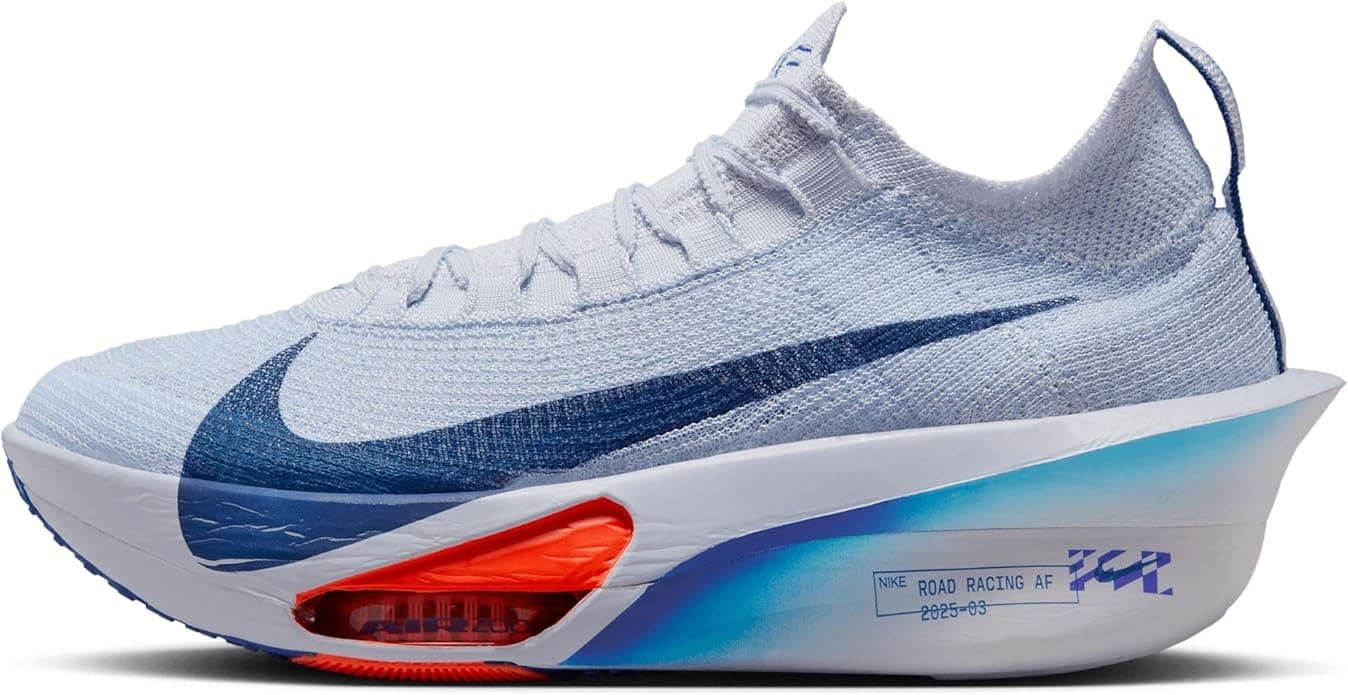
The Alphafly 3 packs more technology into a shoe than almost anything else on the market: ZoomX foam, a full carbon plate, and two visible Air Zoom pods in the forefoot.
What makes it special:
- ZoomX foam + Air Zoom pods — The most powerful midsole available. Exceptional bounce and energy return
- Maximum late-race protection — Your legs feel fresher in the final 2K when the race gets hard
- Best for runners over 70kg — Bigger runners get more benefit from the extra foam and Air pod technology
- Carbon plate — Full-length plate provides consistent propulsion at every pace
The trade-offs:
- At 215g, it's significantly heavier than the Vaporfly
- The bouncy ride can feel like too much shoe for a 35-minute effort
- Premium price at $285
Weight: 215g (US 10) | Drop: 8mm | Stack: 39.5/39.5mm
The verdict: For 10K, the Alphafly works best for runners who weigh over 70kg or prefer a cushioned, high-energy ride. If you've ever felt beat up in the last 2K of a hard 10K, the additional foam and Air pods help maintain your form when it matters most.
4. Adidas Adizero Adios Pro 4 — Best for Road Feel
The Adios Pro 4 uses five separate carbon Energy Rods instead of a single plate. This creates a distinctive ride that many runners describe as more "connected" to the road.
What makes it special:
- 5x Carbon Energy Rods — Propulsion without the disconnected feeling that full plates can produce
- Lightstrike Pro foam — Responsive energy return with a firm, fast feel
- 185g — Extremely competitive weight with lower stack height for better proprioception
- Confident cornering — The lower profile and road-connected feel give more control on technical courses
Weight: ~185g (US 10) | Drop: 6mm | Stack: 39/33mm
The verdict: Many 10K courses have tight corners, undulations, and technical sections. The Adios Pro 4's lower profile and road-connected feel give you more control than higher-stacked alternatives. If you want to feel the road rather than float above it, this is your shoe.
5. Saucony Endorphin Elite 3 — Lightest Option for Speed Demons
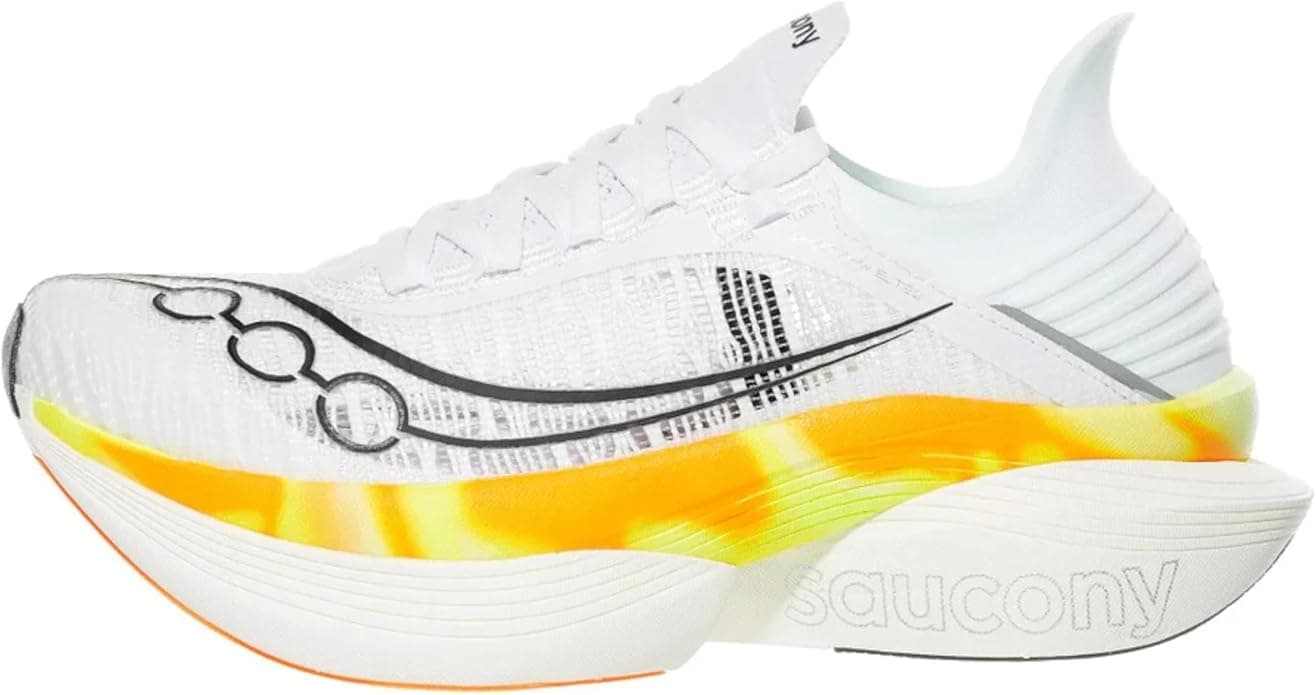
The lightest carbon-plated shoe available at 175g. PWRRUN HG foam for maximum speed. Built for sub-35 and sub-30 runners.
At approximately 175g, the Endorphin Elite 3 is the lightest carbon-plated shoe you can buy. It's an uncompromising race-day weapon designed for maximum speed.
What makes it special:
- 175g — The lightest carbon-plated shoe on the market by a meaningful margin
- PWRRUN HG foam — Energy-dense and responsive despite the minimal build
- Aggressive plate geometry — Rewards efficient runners at high speed
- Speed-tuned rocker — Becomes more aggressive as you pick up pace
The trade-offs:
- Minimal cushioning means it's best suited to lightweight, efficient runners
- Less forgiving than the Pro 5 — demands good running form
- Race-day only — not durable enough for training
Weight: ~175g (US 10) | Drop: 8mm | Stack: 40/32mm
The verdict: For sub-35 or sub-30 minute 10K runners, the Elite 3's ultra-low weight is a genuine advantage. At 10K pace, you're moving fast enough that the reduced cushioning is less of a concern. If speed is everything, this delivers.
6. Asics Metaspeed Sky Paris — Best for Stride-Dominant Runners
Stride-optimised design with wider platform and FF Turbo Plus foam. Built for runners who get faster by lengthening their stride.
Asics designed two versions of their racing shoe based on biomechanical data: the Sky for stride runners and the Edge for cadence runners. The Sky model is built for runners who naturally extend their stride when they speed up.
What makes it special:
- Stride-optimised plate geometry — Carbon plate designed for a powerful push-off phase
- FF Turbo Plus foam — Competitive energy return with extra stability
- Wider platform — Supports stride runners with extra stability during longer strides
- Data-driven biomechanics — One of the few shoes scientifically designed for a specific running style
Weight: ~200g (US 10) | Drop: 5mm | Stack: 41/36mm
The verdict: If your natural response to going faster is to extend your stride rather than increase turnover, the Metaspeed Sky is scientifically designed for your running style. It's one of the few shoes that genuinely caters to biomechanical differences.
7. Saucony Endorphin Speed 5 — Best Training-to-Racing All-Rounder
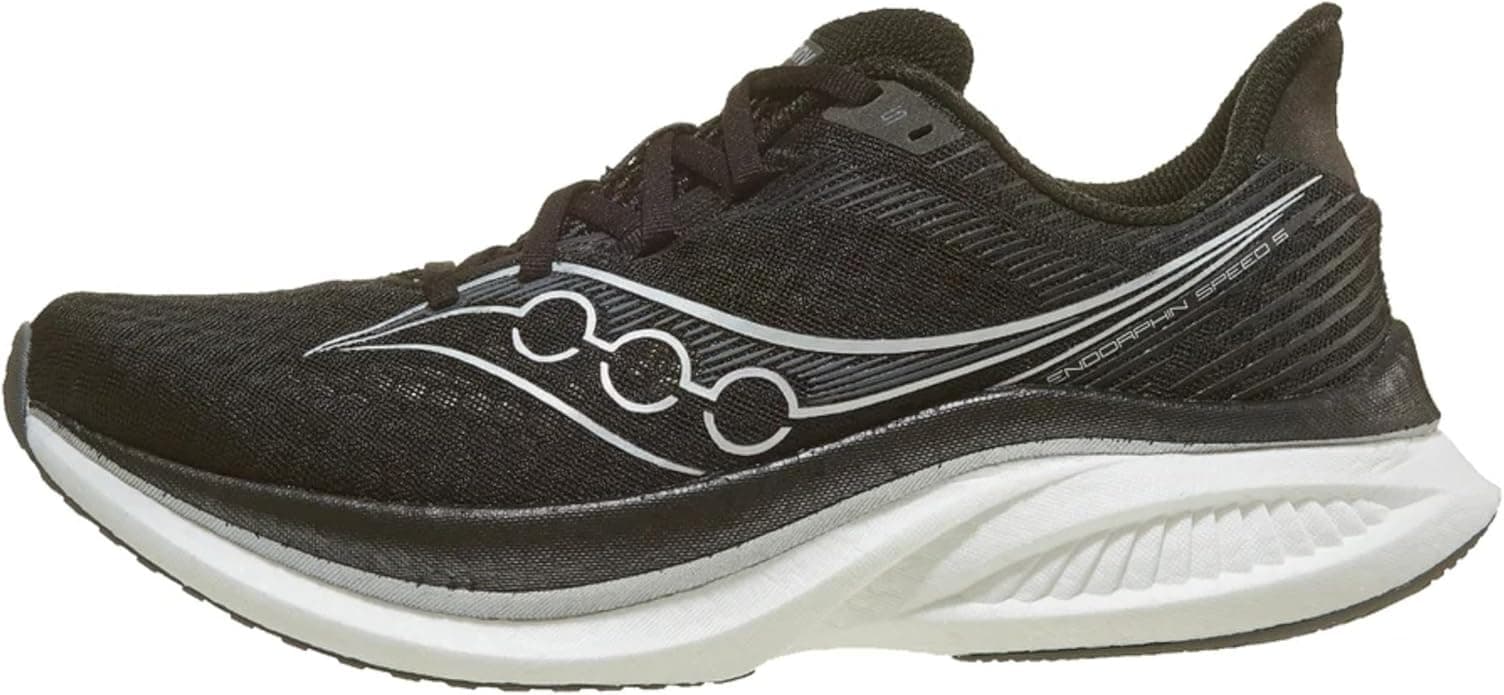
The Endorphin Speed 5 continues to be the most versatile performance shoe in running. Its nylon plate delivers excellent propulsion without the extreme stiffness of carbon, and the PWRRUN PB foam cushions well enough for daily training and racing.
What makes it special:
- Nylon fibre plate — Excellent propulsion without extreme stiffness. More forgiving than carbon
- PWRRUN PB foam — Top-tier midsole material that's both responsive and durable
- Dual-purpose design — Fast enough to race, tough enough to train in. One shoe for everything
- $160 price point — Best value in performance running shoes
Weight: ~210g (US 10) | Drop: 8mm | Stack: 36/28mm
The verdict: If you race 10Ks regularly — monthly or more — the Speed 5 makes financial and practical sense. You can do your tempo runs, intervals, and races all in the same shoe without worrying about destroying an expensive super shoe.
The smart money pick: For runners who race frequently, the Endorphin Speed 5 at $160 is a better investment than a $275 super shoe you're afraid to wear. Train in it, race in it, and replace it without guilt.
8. New Balance FuelCell SC Elite v5 — Smooth and Versatile
New Balance's top racing shoe has earned a reputation for being one of the most comfortable super shoes. The FuelCell foam has a softer feel than competitors, and the carbon plate has a gentle curvature that promotes a smooth rolling transition.
What makes it special:
- Smooth gait transition — Effortless forward roll from heel to toe that feels automatic
- FuelCell foam — Slightly softer than competitors, making pace feel easier
- Even-pacing geometry — Doesn't feel aggressively fast, which actually helps you race smarter
- 200g — Competitive weight with a comfortable, predictable ride
Weight: ~200g (US 10) | Drop: 6mm | Stack: 39/33mm
The verdict: The SC Elite v5 doesn't try to make you run fast — it makes running at pace feel easy. If you tend to go out too fast and fade in 10Ks, the less aggressive geometry can actually help you race smarter.
9. Nike Zoom Fly 6 — Best Budget Carbon-Plated 10K Shoe
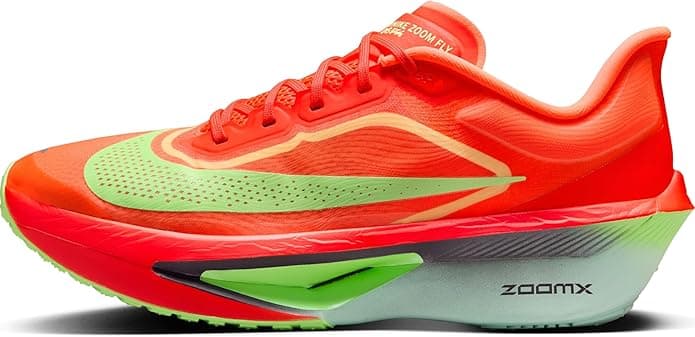
The Zoom Fly 6 takes the proven Vaporfly formula and makes it accessible. ReactX foam replaces ZoomX, making the shoe slightly heavier and slightly less bouncy — but also around $80 cheaper.
What makes it special:
- Full carbon plate — The same propulsion technology that makes the Vaporfly fast
- ReactX foam — Solid energy return, slightly heavier than ZoomX but more durable
- $170 price point — Most of the super shoe benefit at a much more reasonable price
- Training-worthy durability — Can handle fast training sessions between races
Weight: ~240g (US 10) | Drop: 10mm | Stack: 40/30mm
The verdict: For recreational runners chasing a 10K PB, the Zoom Fly 6 provides most of the super shoe benefit at a much more reasonable price. The difference between the Zoom Fly 6 and Vaporfly 3 is measurable — but for most runners, it's smaller than the difference between a good training block and a bad one.
10. Brooks Hyperion Max 3 — Best for Stability and Comfort
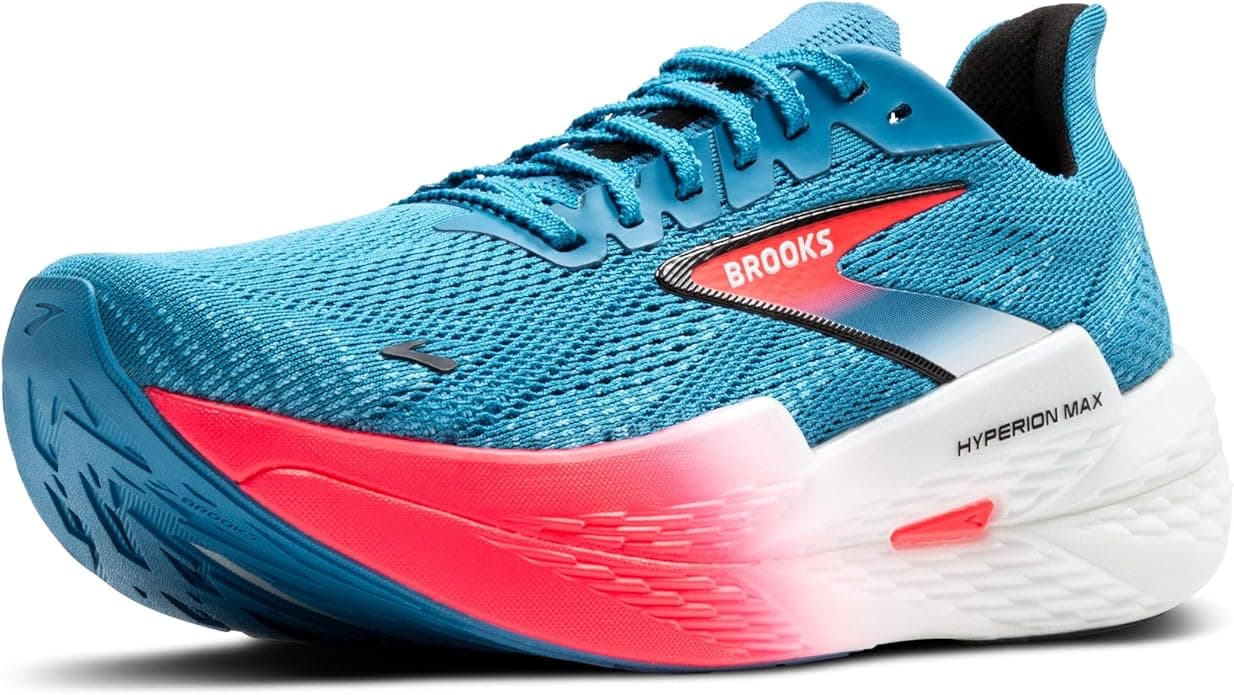
The Hyperion Max 3 is the shoe for runners who want speed without the compromises of a super shoe. No carbon plate, no extreme stack height — just lightweight, responsive, and remarkably stable.
What makes it special:
- DNA Flash foam (nitrogen-infused) — Good energy return in a stable, predictable package
- No carbon plate — More secure feel underfoot, especially on hilly or technical courses
- 225g — Heavier than super shoes, but remarkably light for a stability-oriented shoe
- Proven reliability — No surprises. It does exactly what you expect, every time
Weight: ~225g (US 10) | Drop: 8mm | Stack: 34/26mm
The verdict: If you value confidence and control over raw speed, the Hyperion Max 3 delivers. It's especially good for runners on hilly or technical 10K courses where stability matters more than foam technology.
How to Choose the Right 10K Shoe for You
Still not sure? Here's our decision framework:
Choose the Nike Vaporfly 3 if:
- You want the best overall 10K racing shoe
- You value the speed-to-protection balance
- You're targeting a PB on a flat course
Choose the Saucony Endorphin Pro 5 if:
- You want comfort AND speed in a carbon shoe
- You want something that works for every running style
- You're racing 10K through marathon distance
Choose the Nike Alphafly 3 if:
- You weigh over 70kg
- You want maximum cushioning and late-race protection
- Your legs always hurt in the final 2K
Choose the Saucony Endorphin Speed 5 if:
- You race 10Ks frequently
- You want one shoe for training and racing
- Budget matters — great performance at $160
Choose the Brooks Hyperion Max 3 if:
- You've tried super shoes and felt unstable
- You run technical or hilly 10K courses
- You value control over bounce
Critical rule: Test your race shoe at 10K pace in training. Do at least two tempo runs or race-pace intervals in your chosen shoe before race day. The way a shoe feels at easy pace is very different from how it feels at 10K effort.
Frequently Asked Questions
Is there a meaningful difference between 5K and 10K shoes?
At the competitive level, yes. 10K shoes typically prioritise slightly more cushioning than pure 5K racers, because 30–55 minutes of running demands more protection than 15–25 minutes. However, all shoes on this list work well at both distances.
How important is the carbon plate for 10K?
The data shows 2–3% improvement on average at 10K distance. For a 40-minute runner, that's 48–72 seconds. For a 50-minute runner, 60–90 seconds. It's a meaningful advantage, but not mandatory — the Brooks Hyperion Max 3 and Endorphin Speed 5 prove you can race fast without one.
Should I use the same shoe for training and racing?
If budget allows, no. Race in a super shoe (Vaporfly, Elite 3) and train in the Endorphin Speed 5 or Zoom Fly 6. If you can only have one shoe, the Endorphin Speed 5 is the best dual-purpose option.
How do I know if I'm a cadence or stride runner?
Run at your 10K pace and notice how you speed up. If you naturally increase step frequency, you're cadence-dominant (consider the Adios Pro 4 or Metaspeed Edge). If you naturally lengthen your stride, you're stride-dominant (consider the Metaspeed Sky).
Final Thoughts
The 10K is the sweet spot of road racing — and it's the sweet spot for modern racing shoes too. The energy savings from carbon-plated technology compound perfectly over 10,000 metres, and the lighter shoes still give you a meaningful weight advantage.
Key Takeaway
At 10K, balance is everything. You need a shoe that's light enough for speed but cushioned enough for 30–55 minutes of sustained effort. The Vaporfly 3 nails this balance for most runners, but the Endorphin Pro 5 is the smarter choice if comfort matters more than raw speed.