The 5K is the most popular race distance in the world — and it rewards a very specific type of shoe. You need something lightweight, explosive, and responsive. Cushioning matters less than at longer distances, because you're only on your feet for 15–35 minutes.
The rise of carbon-plated super shoes has changed 5K racing dramatically. Data from World Athletics shows that modern racing shoes contribute to time improvements of 1–3% on average compared to traditional racing flats. At the 5K distance, that can mean 15–60 seconds depending on your level.
Whether you're chasing a sub-15 parkrun PB, racing your first 5K, or looking to shave seconds off your time, this guide will help you find the right shoe.
What Makes a Great 5K Shoe?
Before we get into the rankings, you need to understand what separates a great 5K shoe from a shoe built for longer distances. The 5K is short and fast — you're running at near-maximum effort for 15–35 minutes. That changes what matters.
- Weight — The single most important factor. Every gram matters over 3.1 miles. Lighter shoes reduce the energy cost per stride, and those savings compound over 5,000 metres.
- Responsiveness — You need explosive toe-off at high cadence. The midsole has to return energy instantly, not absorb it.
- Carbon Plate — Improves running economy by 1–4%. At 5K pace, the stiffness and propulsion from a plate are a genuine advantage.
- Cushioning — Moderate. Enough to protect, not so much it feels sluggish. You don't need marathon-level foam for 20 minutes of running.
- Breathability — Short races mean high effort and heat. Ventilation matters.
Pro tip from race data: At the 5K distance, shoe weight matters more than cushioning. A 186g shoe vs a 240g shoe saves roughly 54g per foot — across ~3,000 strides in a 5K, that's over 160kg of total load reduction. Lighter shoes let you maintain cadence when it hurts most.
Quick Comparison: Our Top 10 at a Glance
1. Nike Vaporfly 3 — Best Overall 5K Racing Shoe
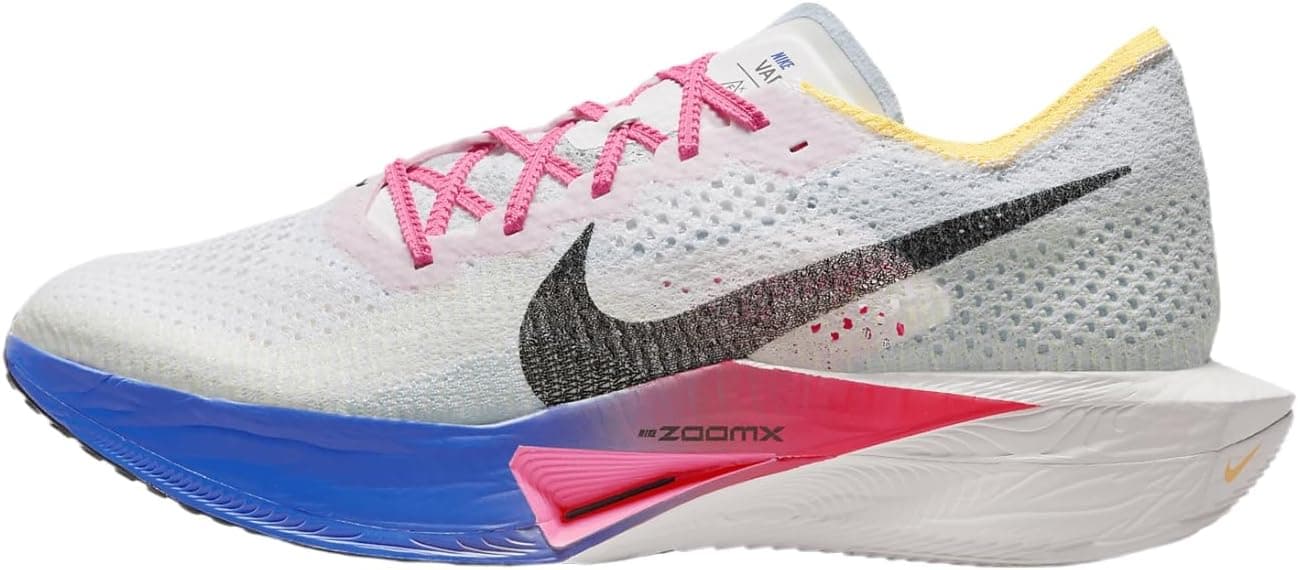
The Vaporfly 3 is the gold standard for short-distance racing. At just 186g, it's one of the lightest super shoes available and delivers an incredibly snappy ride that's tailor-made for 5K efforts.
What makes it special:
- ZoomX foam + carbon plate — The combination that revolutionised racing. Maximum energy return at minimum weight
- 186g — One of the lightest carbon-plated shoes you can buy. You'll feel the difference from the first stride
- Breathable mesh upper — Lightweight construction keeps weight down and heat out during max-effort racing
- Proven at every level — From parkrun PBs to World Championships, more records have been set in Vaporflys than any other shoe
Weight: 186g (US 10) | Drop: 8mm | Stack: 39.5/31.5mm
The verdict: The combination of low weight and high energy return makes the Vaporfly 3 unbeatable at 5K. Many elite 5K runners choose the Vaporfly over heavier alternatives because the reduced stack height gives better ground feel and faster turnover. If you want the fastest 5K possible, this is your shoe.
Why it's our #1: The 5K is arguably the Vaporfly's best distance. It's light enough to feel fast, cushioned enough to protect you, and the carbon plate pays dividends over 5,000 metres of sustained hard running. No other shoe matches this combination.
2. Saucony Endorphin Elite 3 — Lightest Super Shoe on the Market
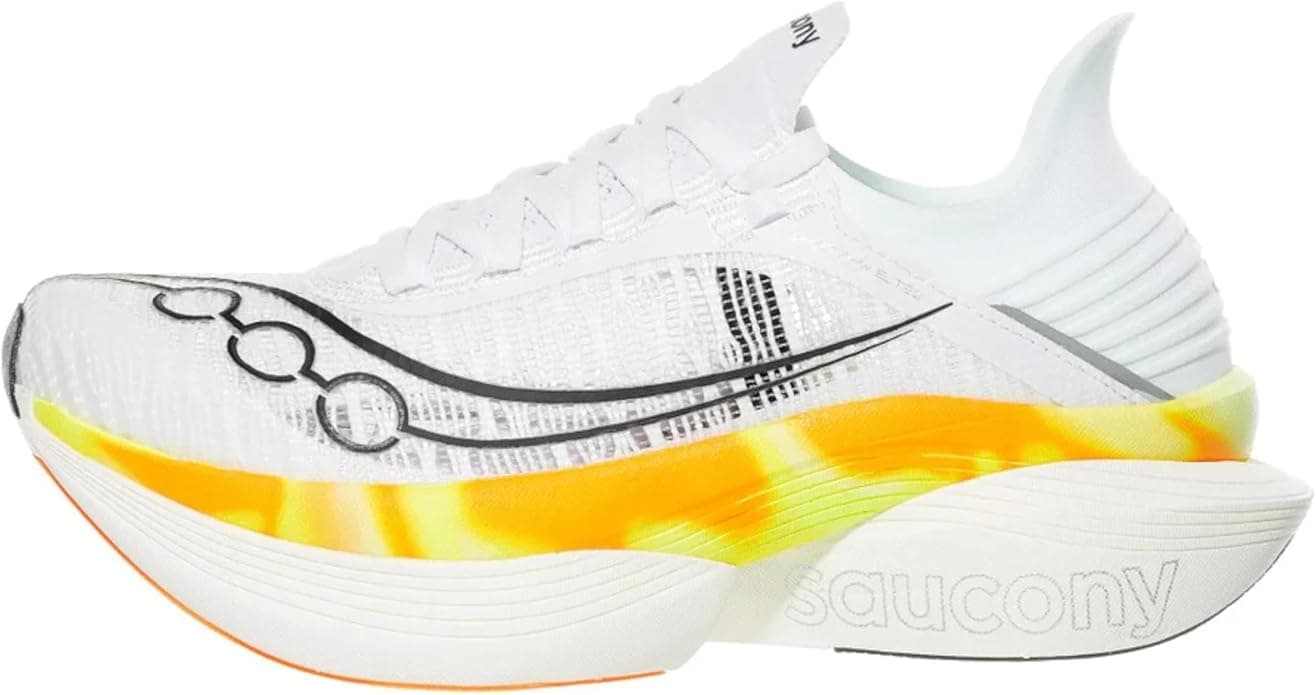
The lightest carbon-plated racing shoe available. PWRRUN HG foam and aggressive plate geometry for maximum speed.
Saucony went all-in on weight reduction with the Elite 3. At roughly 175g, it's the lightest carbon-plated racing shoe you can buy. This is a pure race-day weapon — not something you'd use for tempo runs or workouts.
What makes it special:
- 175g — The lightest carbon-plated shoe on the market. Every gram stripped away for maximum speed
- PWRRUN HG foam — Energy-dense and highly responsive despite the minimal build
- Aggressive carbon plate geometry — Designed for high-speed running with powerful forward propulsion
- Speed-tuned rocker — Becomes more responsive as you increase pace, rewarding runners who go fast
Weight: ~175g (US 10) | Drop: 8mm | Stack: 40/32mm
The verdict: If you want absolute minimum weight, nothing beats the Elite 3. The aggressive plate geometry rewards runners with a fast cadence and efficient form. For sub-15 and sub-18 runners, those 11g saved per foot versus the Vaporfly add up.
3. Adidas Adizero Adios Pro 4 — Best for High Cadence Runners
The Adios Pro 4 uses Adidas' Lightstrike Pro foam combined with five separate carbon-infused Energy Rods rather than a single plate. This creates a distinctive snappy feel that's different from single-plate designs.
What makes it special:
- 5x Carbon Energy Rods — More connected road feel than a single plate. You get propulsion without the "bouncy" feeling some runners dislike
- 185g — Extremely competitive weight with a lower stack height for better ground contact
- Lightstrike Pro foam — Responsive and fast without being overly soft
- Lower profile — Better proprioception and more confident cornering on twisty 5K courses
Weight: ~185g (US 10) | Drop: 6mm | Stack: 39/33mm
The verdict: The rod system provides excellent responsiveness without the "bouncy" feeling that some runners dislike in thicker super shoes. If you're a high-cadence runner who wants to feel connected to the road, the Adios Pro 4 is designed for you.
4. Nike Alphafly 3 — Maximum Power for Stronger Runners
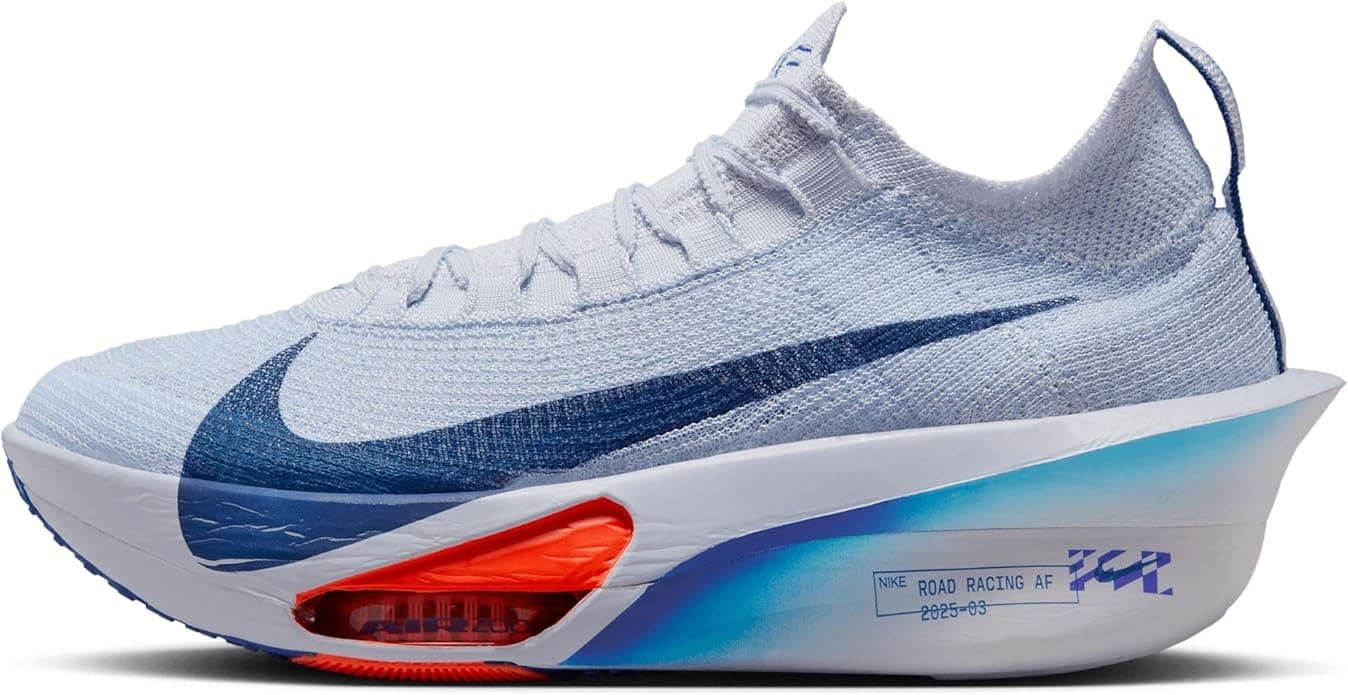
The Alphafly 3 is heavier than the Vaporfly at 215g, but it compensates with more foam, a full carbon plate, and two visible Air Zoom pods in the forefoot. The result is an incredibly powerful ride.
What makes it special:
- ZoomX foam + Air Zoom pods — The bounciest, most powerful midsole available. Explosive energy return at toe-off
- Full carbon plate — Propulsive snap on every stride
- Maximum cushioning — Protects your legs even at 5K intensity
- Best for runners over 75kg — Bigger runners benefit more from the extra foam and Air pod technology
The trade-offs:
- At 215g, it's significantly heavier than the top 3
- The 40mm stack can feel like too much shoe for a 20-minute race
- Premium price point at $285
Weight: 215g (US 10) | Drop: 8mm | Stack: 39.5/39.5mm
The verdict: For bigger or stronger runners who benefit from the extra cushioning and propulsion, the Alphafly's energy return at high speed is exceptional. If you weigh over 75kg or have a powerful stride, the Air Zoom pods add a noticeable pop at toe-off that lighter shoes can't match.
5. Asics Metaspeed Edge Paris — Best for Cadence-Dominant Runners
Data-driven design built specifically for cadence runners. FF Turbo Plus foam with carbon plate curvature optimised for fast turnover.
Asics designed the Metaspeed line with a data-driven approach, splitting runners into two categories: stride runners and cadence runners. The Edge model is built specifically for cadence-dominant runners — those who get faster by increasing step frequency.
What makes it special:
- Cadence-optimised plate geometry — Carbon plate curvature designed for fast turnover, not long strides
- FF Turbo Plus foam — Lightweight and responsive with excellent energy return at high cadence
- Lower stack height — More ground contact for runners who rely on quick feet
- Data-driven design — Asics used biomechanical research to optimise for cadence runners specifically
Weight: ~195g (US 10) | Drop: 5mm | Stack: 38/33mm
The verdict: Most 5K runners naturally adopt a high-cadence approach. If that's you — if you get faster by spinning your legs rather than lengthening your stride — the Edge's design philosophy aligns perfectly with your biomechanics.
6. Saucony Endorphin Speed 5 — Best Without a Carbon Plate
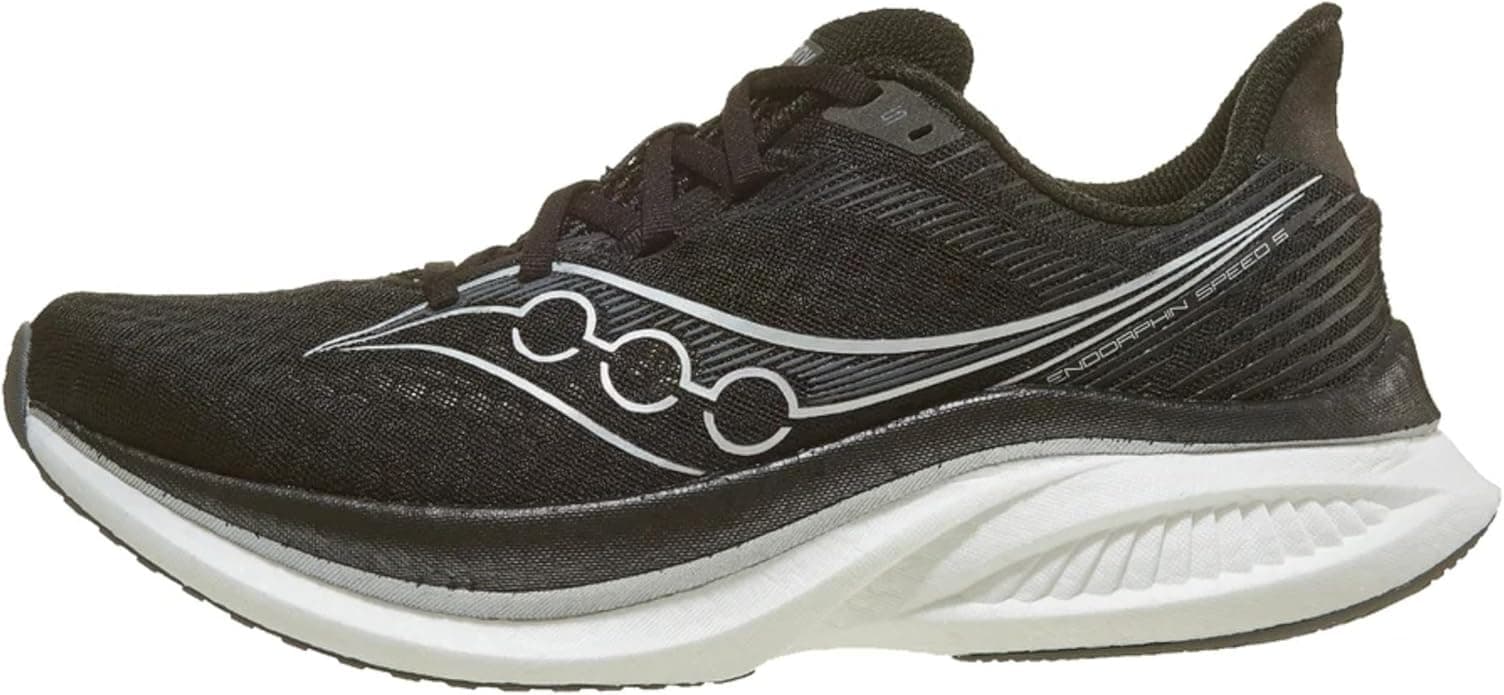
Not everyone wants (or needs) a carbon plate for a 5K. The Endorphin Speed 5 uses a nylon plate instead, delivering a responsive ride at a fraction of the cost of a full super shoe.
What makes it special:
- Nylon fibre plate — Smoother and more forgiving than carbon, with excellent energy return
- PWRRUN PB foam — Top-tier midsole that's both responsive and cushioned
- Dual-purpose — Durable enough for training AND fast enough for racing. One shoe does it all
- $160 price point — Outstanding value when super shoes cost $250+
Weight: ~210g (US 10) | Drop: 8mm | Stack: 36/28mm
The verdict: If you race 5Ks frequently, destroying a $250 super shoe every few races doesn't make sense. The Speed 5 delivers 80% of the performance at 50% of the cost, and it can handle regular training too. The smartest purchase for frequent parkrunners.
Best for parkrunners: If you race 5K weekly at parkrun, the Endorphin Speed 5 is the most practical shoe on this list. It's durable enough for weekly racing and fast enough to chase PBs — without the guilt of wearing down a $275 super shoe.
7. New Balance FuelCell SC Elite v5 — Versatile Super Shoe
New Balance's top racing shoe sits between the Vaporfly and Alphafly in terms of stack and weight, making it a versatile option for runners who race multiple distances.
What makes it special:
- FuelCell foam + carbon plate — Smooth, rolling transition that works well at both 5K pace and marathon pace
- 200g — Competitive weight without extreme minimalism
- Versatile geometry — Responsive enough for short races without being too aggressive
- One shoe for everything — If you want a single super shoe from parkrun to marathon, this is it
Weight: ~200g (US 10) | Drop: 6mm | Stack: 39/33mm
The verdict: If you want one super shoe for everything from parkrun to marathon, the SC Elite v5 is an excellent all-rounder. It's responsive enough for short races without being too aggressive for longer ones.
8. Nike Zoom Fly 6 — Best Budget Carbon-Plated Shoe
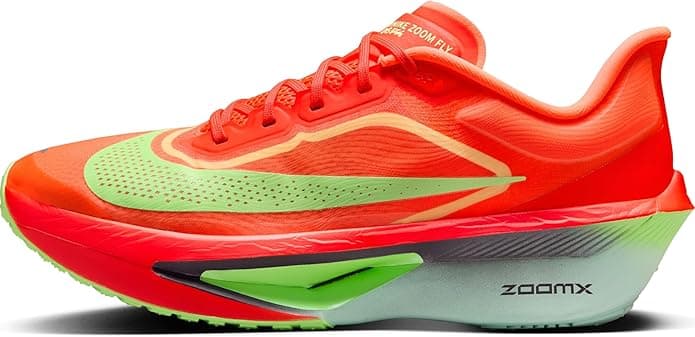
The Zoom Fly 6 takes the Vaporfly concept and makes it accessible. It uses the same full-length carbon plate but pairs it with ReactX foam instead of ZoomX. The result is slightly heavier and slightly less bouncy, but costs about $80 less.
What makes it special:
- Full carbon plate — The same propulsion technology as the Vaporfly, at a fraction of the price
- ReactX foam — Solid energy return that handles race day and training
- Outstanding durability — Can handle a full training cycle plus multiple race days
- $170 price point — The cheapest way to get carbon plate technology
Weight: ~240g (US 10) | Drop: 10mm | Stack: 40/30mm
The verdict: For runners who race occasionally and can't justify spending $250+ on a dedicated racing shoe, the Zoom Fly 6 is the smart choice. You still get the carbon plate advantage at a price that makes sense.
9. Hoka Cielo X1 — Hoka's Lightest Racer
PEBA foam and carbon plate with Hoka's signature rocker geometry. A natural, forward-rolling gait at competitive race weight.
Hoka's race-day super shoe brings the brand's signature early-stage rocker to the 5K. PEBA foam, carbon plate, and rocker geometry create an efficient, forward-rolling gait cycle.
What makes it special:
- PEBA foam + carbon plate — Competitive energy return in Hoka's lightest package
- Rocker geometry — Promotes an efficient, forward-rolling gait that some runners find more natural
- 195g — Competitive with the Vaporfly on weight
- Reduced calf loading — The rocker design takes some propulsive burden off your calves
Weight: ~195g (US 10) | Drop: 5mm | Stack: 35/30mm
The verdict: If you're a Hoka runner who likes the brand's rocker geometry, the Cielo X1 brings that familiar feel to a proper racing shoe. The weight is competitive with the Vaporfly, and the rocker promotes efficiency at 5K pace.
10. Brooks Hyperion Max 3 — Best for Stability-Conscious Runners
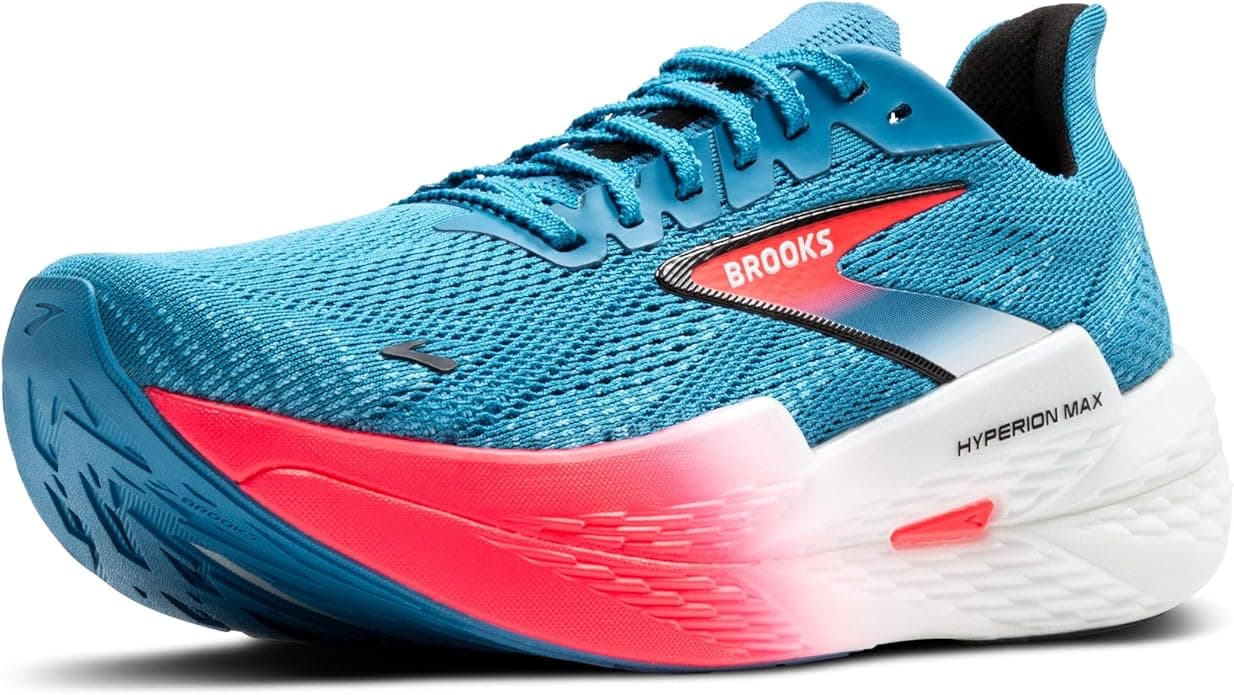
The Hyperion Max 3 isn't a super shoe — it's a lightweight performance trainer with nitrogen-infused DNA Flash foam. What it lacks in carbon-plate pop, it makes up for in stability and comfort.
What makes it special:
- DNA Flash foam (nitrogen-infused) — Good energy return in a stable, predictable package
- No carbon plate — More secure feel underfoot without the instability that high-stack plated shoes can cause
- 225g — Heavier than dedicated racers, but remarkably light for a stability shoe
- Confidence on corners — Especially good on hilly or technical 5K courses where stability matters
Weight: ~225g (US 10) | Drop: 8mm | Stack: 34/26mm
The verdict: Not every runner is comfortable in a bouncy, high-stack super shoe. The Hyperion Max 3 lets you race fast with confidence, especially on courses with corners, hills, or uneven surfaces. If you've tried super shoes and didn't like them, this proves you can still race fast in a traditional design.
How to Choose the Right 5K Shoe for You
Still not sure? Here's our decision framework:
Choose the Nike Vaporfly 3 if:
- You want the best overall 5K racing shoe
- You value the lightest possible carbon plate shoe from a major brand
- You're targeting a 5K PB on a flat, fast course
Choose the Saucony Endorphin Elite 3 if:
- Absolute minimum weight is your top priority
- You're an efficient runner with a fast cadence
- You're targeting sub-15 or sub-18
Choose the Adidas Adios Pro 4 if:
- You prefer a connected road feel over a bouncy ride
- You're a high-cadence runner who dislikes thick super shoes
- You want something that feels like a racing flat with modern technology
Choose the Saucony Endorphin Speed 5 if:
- You race 5Ks frequently (parkrun every week)
- You want a shoe that handles training and racing
- Budget matters — you want great performance without $250+ price tags
Choose the Brooks Hyperion Max 3 if:
- You've tried super shoes and felt unstable
- You run hilly or technical 5K courses
- You value confidence and control over raw speed
Critical rule: Whatever shoe you choose, race in it at least 2–3 times in training before your target race. Do tempo runs and intervals at 5K pace. New shoes on race day = blisters, unexpected sensations, and slower times.
Frequently Asked Questions
Do I need a carbon plate shoe for a 5K?
No, but data shows they help. Carbon-plated shoes improve running economy by 1–4%, which translates to 15–60 seconds at 5K depending on your pace. If you're chasing a specific time, the advantage is real. But shoes like the Saucony Endorphin Speed 5 (nylon plate) and Brooks Hyperion Max 3 (no plate) can still deliver fast 5K times.
How many 5K races can I get out of a super shoe?
Most carbon-plated super shoes last 150–250km before the foam loses significant responsiveness. If you only use them for racing, that's 30–50 races. If you train in them, expect 3–6 months depending on mileage.
Should I size up for racing?
Generally, go true to size for 5K racing. Your feet won't swell much in a 15–35 minute race. The exception: if you're between sizes, go up half a size for comfort. The Nike Zoom Fly 6 and Vaporfly 3 run slightly narrow.
Can I use my 5K shoes for 10K and half marathon?
Yes. All 10 shoes on this list work at distances from 5K through half marathon. The difference is in optimisation — at longer distances, you may want more cushioning (like the Alphafly 3) rather than minimum weight (like the Vaporfly 3).
What about racing flats — are they obsolete?
Essentially, yes. Modern super shoes and performance trainers have made traditional racing flats obsolete for most runners. The energy return from modern foam technology is simply too big an advantage to ignore.
Final Thoughts
The right shoes won't run the race for you — but at 5K pace, every gram and every percentage point of energy return matters. Whether you invest in the Vaporfly 3 or start with the value-packed Endorphin Speed 5, what matters most is that your shoe is light, responsive, and well-fitted.
Key Takeaway
At the 5K distance, weight is king. Prioritise lightweight construction and responsiveness over cushioning. A 186g shoe that returns energy efficiently will serve you better than a 270g shoe with maximum foam. Save the heavy cushioning for marathon day.